Recent posts
-
Small Device, Big AI – What NVIDIA’s Jetson Orin Nano Super Makes Possible
October 31, 2026
-
PHP Security in Practice: Vulnerabilities, Defenses, and Secure Development
October 27, 2026
-
UI/UX Design With AI Tools: 7 Powerful Trends Transforming Product Design in 2026
September 17, 2026
-
AI Lead Generation in 2026: How to Turn Your Website Into a 24/7 Sales System
September 7, 2026
-
Affordable Website Development Services-How to Build a Quality Website Without Overspending
August 4, 2026
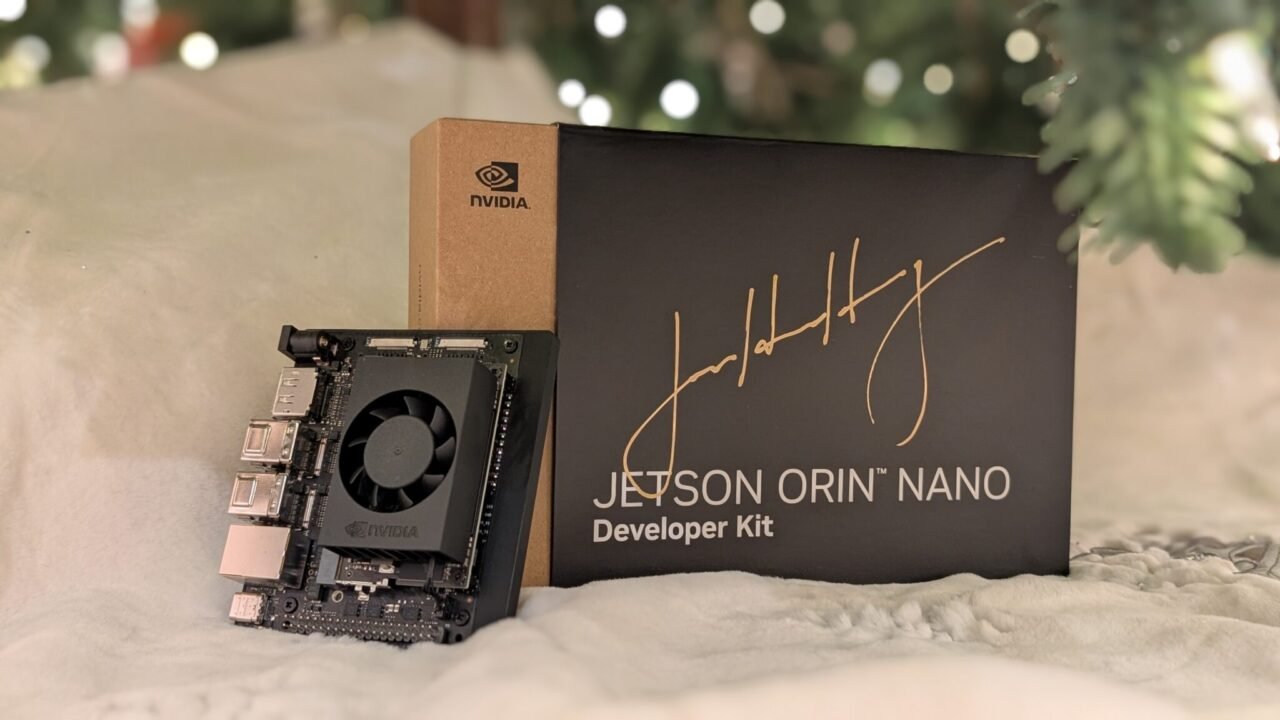
The NVIDIA Jetson Orin Nano Super Developer Kit brings a notable performance boost to a computer small enough to sit on a desk or be built into a compact robot. It is intended for developers, students, and makers exploring generative AI, computer vision, and robotics at the edge—where processing happens close to a device or sensor rather than relying entirely on a remote server. The appeal is practical: a modest physical footprint paired with hardware designed to run demanding AI workloads locally.
Within NVIDIA’s Jetson family, Orin Nano occupies the compact, entry-level position, below the more capable Orin NX and AGX Orin modules. The Super designation reflects an upgrade to the developer kit’s performance, rather than a change in its basic role. NVIDIA specifies up to 67 trillion operations per second (TOPS) of AI performance and reports up to 1.7 times higher generative AI performance than the earlier Jetson Orin Nano Developer Kit. These figures describe hardware capability under stated conditions; actual results depend on the model, software, workload, and power settings.
That improvement can make experiments with local language models, image recognition, and robotic perception more responsive or enable developers to test larger workloads than before. It also lowers the barrier to trying edge AI without first building a custom computer. The platform supports NVIDIA’s software ecosystem, giving users tools and frameworks to develop and optimize applications for deployment on Jetson devices.
Its scope is important, however. The Orin Nano Super is an edge-computing development kit, not a general-purpose replacement for a desktop workstation and not a substitute for a cloud data center. It has limits in memory, power, and overall compute capacity compared with those systems. Its value lies in prototyping and running appropriately sized AI applications locally, including in space- or power-constrained projects. In that role, the upgrade makes a compact Jetson platform more capable while keeping its focus on accessible experimentation.
The Jetson Orin Nano Super Developer Kit raises stated AI performance to 67 TOPS, compared with 40 TOPS for the earlier configuration. NVIDIA also cites memory bandwidth of 102 GB/s, up from 68 GB/s. The improvement comes through an updated software configuration for the kit, rather than a wholly new board. Its compact developer-kit format and 8 GB of memory remain important when considering the kinds of applications it can practically support.
Higher throughput can make local AI work feel more immediate. For language models, it may reduce the wait for generated text, although model size and quantization strongly affect speed and quality. In computer vision, additional capacity can help process camera frames or run detection tasks with less delay. Multimodal projects that combine text, images, audio, or video may also benefit when several model operations need to run on the same device. These gains can make testing ideas and adjusting models more responsive.
Running models on the device can also reduce dependence on remote services. Requests need not always be sent to a cloud endpoint, which may help when connectivity is limited or when a project benefits from keeping data local. That does not mean every workload will run quickly, or that local processing removes all privacy and security considerations. Performance varies with model architecture, precision, software optimizations, memory use, cooling, and the number and type of tasks running concurrently.
The kit’s announced $249 price makes entry-level edge-AI experimentation more accessible than many higher-end systems, particularly for students, developers, and small teams. A lower purchase price, however, is only one part of a useful project: users still need suitable models, development skills, power, storage, and a deployment plan. The performance figures describe potential, not a guaranteed experience. Choosing a workload that fits the device—and measuring it under realistic conditions—remains essential to judging whether the upgrade offers practical value.
A compact Jetson platform can support more than a single demonstration; it can serve as a practical base for projects that benefit from local inference. Developers might build a voice-controlled assistant that answers routine questions, recognizes commands, or searches a small local knowledge base. Camera-based systems can identify objects, monitor equipment, or describe scenes without continuously sending video to a cloud service. Robotics prototypes can combine vision with motion planning, while on-device summarization can condense notes, logs, or sensor reports. Image analysis is another option, from sorting captured pictures to flagging visible defects. The most suitable applications have a defined task and manageable input sizes.
A sensible workflow starts by matching the use case to a model that fits the device’s memory and compute limits. A smaller or quantized model may respond faster and use fewer resources, although it may provide less detailed results than a larger alternative. Developers can optimize inference with supported runtimes and acceleration tools, then connect cameras, microphones, motors, or other peripherals as required. Testing should happen in the intended environment, not only at a desk: measure response latency, throughput, and power consumption under realistic workloads. These checks help reveal whether the system can meet practical requirements without overheating, draining a battery too quickly, or introducing unacceptable delays.
Running AI at the edge reduces dependence on a stable network and can keep sensitive inputs on the device, giving developers greater control over data handling. It may also enable faster responses when connectivity is limited. These advantages come with trade-offs: compact hardware cannot run every model or workload, and configuring software, drivers, and sensors can require substantial setup effort. Local processing does not automatically make an application private or safe. Teams should decide what data is stored, who can access it, and how errors are handled. For projects involving people, movement, or consequential decisions, evaluate privacy, reliability, and physical safety before deployment. A focused prototype, carefully measured, can establish whether edge inference is a useful fit.
The Jetson Orin Nano Super may suit several audiences, but its value depends on what they want to build. AI learners can use it to explore local inference and understand how models behave outside cloud services. Hobbyists may appreciate a compact platform for interactive experiments, such as vision projects or voice interfaces. Researchers can use an embedded system to test edge-AI ideas under practical power and memory constraints. Developers creating robotics or edge-computing prototypes may benefit from running perception and generative-AI workloads close to sensors and actuators, where connectivity, latency, or privacy matters. It is not automatically the right choice for every project: desktop GPUs and cloud instances can offer more headroom for larger models or sustained workloads.
Before buying, confirm the exact product configuration and what the kit includes. Listings may differ in accessories, such as a power supply, storage, camera, or enclosure, and these can affect the total cost and setup time. Review the current software support, operating-system image, framework versions, and compatibility requirements for the models and peripherals you intend to use. Check the recommended power supply and consider whether your project needs additional cooling; intensive workloads can produce heat, and a suitable thermal setup helps maintain reliable operation. Finally, compare your expected tasks with the board’s memory capacity and performance limits. A small model or prototype may run comfortably, while larger models, multiple simultaneous processes, or demanding real-time workloads may require compromises in model size, speed, or resolution.
This platform is most compelling when the goal is hands-on experimentation with AI running locally, rather than maximum compute per dollar. It can make generative-AI prototyping more approachable by bringing inference onto a compact, developer-oriented device, while still requiring realistic expectations about performance and setup. For accompanying editorial assets, use the supplied image as the article’s visual reference; do not present it as a generated profile picture. Relevant tags include NVIDIA Jetson, Jetson Orin Nano Super, edge AI, generative AI, robotics, AI development, and on-device inference. A careful match between the kit, software, power, cooling, and workload can help buyers decide whether this small platform fits their next prototype.