
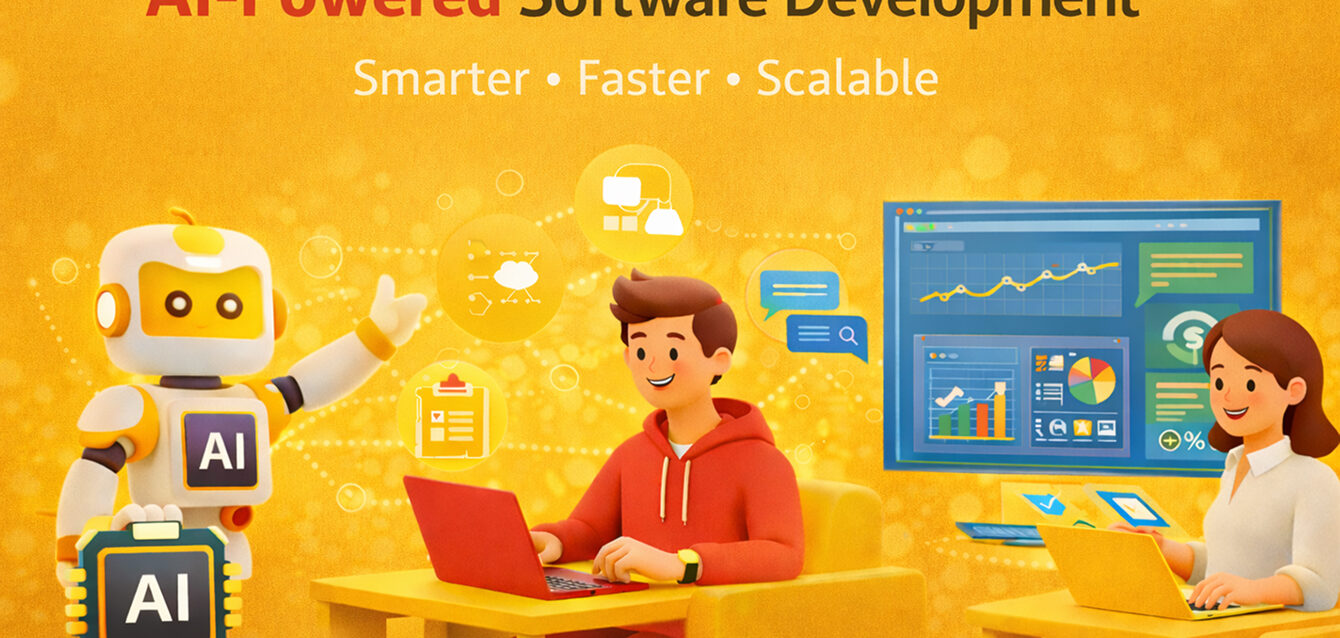
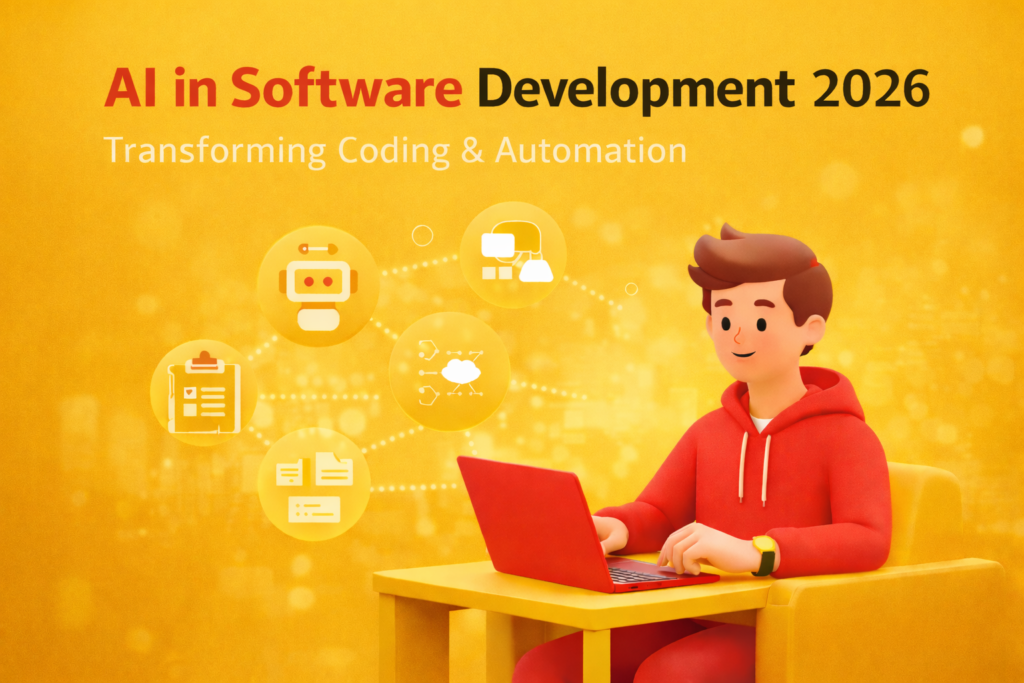
AI in Software Development 2026 is transforming how applications are built, tested, and deployed using AI tools and automation. The software development industry in 2026 is undergoing a massive transformation, driven by the rapid rise of artificial intelligence and automation. What once required extensive manual effort, large development teams, and long timelines can now be achieved in a fraction of the time. Intelligent systems are enabling developers to build faster, smarter, and more efficient applications. Businesses are no longer adopting these technologies just for innovation—they are using them as essential tools to stay competitive in a digital-first world.
Artificial intelligence is redefining how software is built from the ground up. Developers today rely heavily on AI-powered tools that assist in writing code, identifying bugs, and suggesting improvements in real time. This shift is not only increasing productivity but also reducing human error significantly. As a result, development teams can focus more on solving complex business challenges rather than spending time on repetitive tasks. AI is also enhancing user experiences through intelligent chatbots, recommendation systems, and predictive features that are becoming standard in modern applications.
At the same time, automation is reshaping the entire software development lifecycle. From testing and deployment to infrastructure management, processes that once required manual intervention are now handled through advanced automation pipelines. Continuous integration and continuous deployment (CI/CD) have become essential practices, allowing businesses to release updates faster while maintaining stability and performance. This level of automation is especially valuable for companies looking to scale rapidly without compromising quality.
Another major trend shaping 2026 is the rise of low-code and no-code platforms. These tools are empowering businesses and non-technical users to build applications with minimal coding knowledge. While traditional development remains critical for complex systems, these platforms are accelerating innovation and enabling faster prototyping. Alongside this, cloud-native development continues to dominate, offering scalability, flexibility, and cost-efficiency for businesses of all sizes.
Microservices architecture is also gaining strong momentum. Instead of building large monolithic applications, developers are shifting toward smaller, independent services that can be updated, scaled, and maintained more efficiently. This modular approach aligns perfectly with automation and cloud technologies, allowing businesses to grow without technical limitations.
AI in Software Development 2026 Trends
Several key trends are driving the future of software development, and understanding them is essential for any business planning long-term growth.
- AI-powered development tools are reducing coding time and improving accuracy
- Low-code and no-code platforms are enabling faster application development
- Cloud-native applications are becoming the standard for scalability
- Microservices architecture is replacing traditional monolithic systems
- DevOps automation is streamlining development and deployment processes
These trends are not just technical improvements—they are strategic advantages that help businesses innovate faster and operate more efficiently.
Advantages of AI in Software Development 2026
From a business perspective, adopting AI with AI in software development 2026, businesses can scale faster, and automation offers significant benefits. Companies adopting AI in software development in 2026 gain a competitive advantage. Faster deployment cycles allow businesses to respond quickly to market demands, while automation reduces operational costs. Additionally, AI-driven features enhance user engagement and personalization, leading to improved customer satisfaction and retention.
Key advantages include:
- Faster development cycles and quicker time-to-market
- Reduced operational and development costs
- Improved accuracy with fewer errors
- Better scalability through cloud and microservices
- Enhanced user experience with intelligent features
Challenges & Limitations
Despite its advantages, implementing AI and automation comes with certain challenges. Businesses must invest in the right tools, infrastructure, and skilled professionals. There is also a risk of over-reliance on automated systems, which can limit human creativity if not properly balanced. Security and data privacy are additional concerns, especially when working with AI-driven systems that rely heavily on data.
Common challenges include:
- Initial setup and integration complexity
- Need for experienced AI professionals
- Security and data privacy risks
- Continuous updates and maintenance
- Risk of over-automation
Understanding these limitations helps businesses make smarter, more informed decisions.
Real-World Use Cases
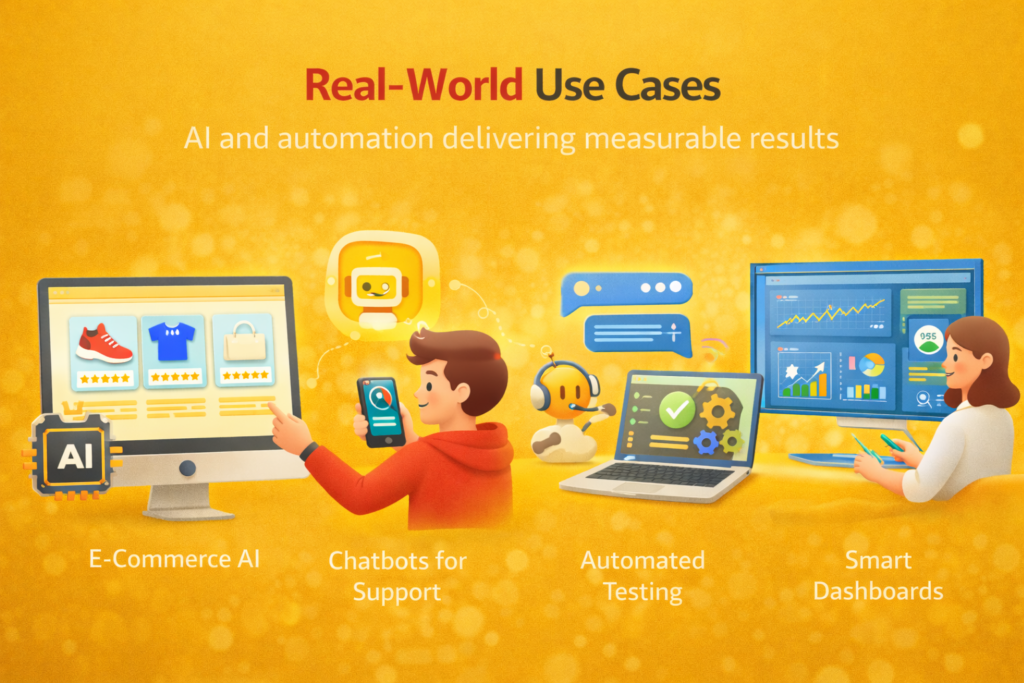
AI and automation are already delivering measurable results across industries. E-commerce platforms use AI to recommend products and increase conversions, while businesses deploy chatbots to provide instant customer support. Development teams rely on automated testing tools to ensure bug-free releases, and smart dashboards provide real-time insights for better decision-making. These real-world applications highlight how AI is not just a trend but a powerful solution driving real business value.
Why Businesses Should Act Now
In today’s competitive landscape, adopting AI and automation is no longer optional. Companies that embrace these technologies early gain a significant advantage by delivering faster, smarter, and more reliable solutions. Businesses that delay adoption risk falling behind as customer expectations continue to evolve.
AI enables better decision-making, improves operational efficiency, and enhances customer engagement. It allows organizations to shift from reactive strategies to proactive innovation, which is essential for long-term success.
How Codmash Helps Businesses
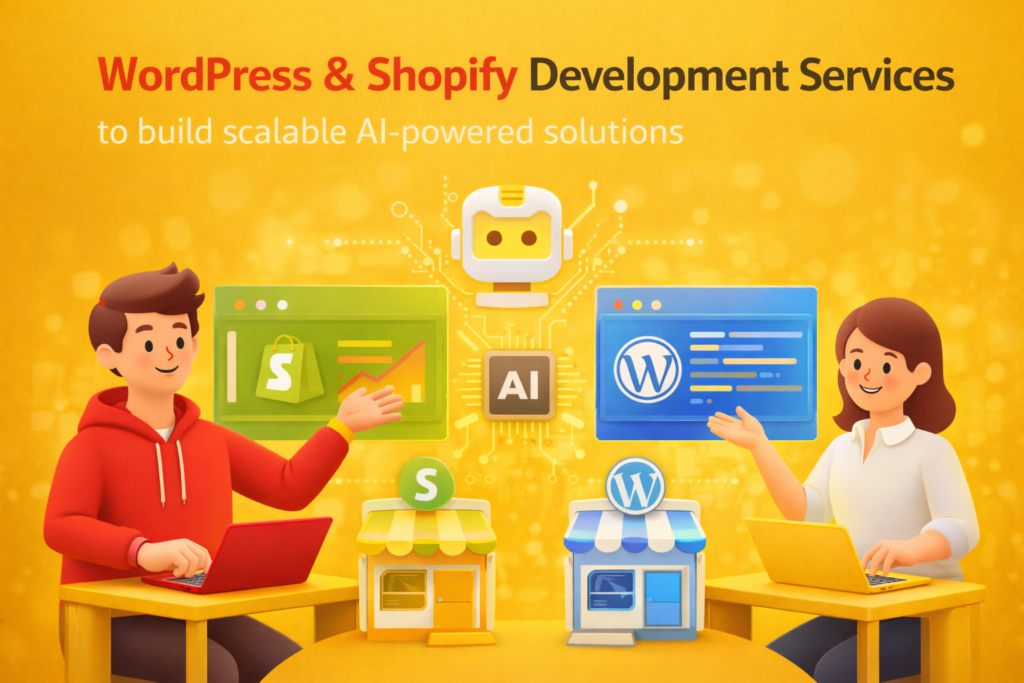
At Codmash, we specialize in implementing modern, AI-driven development solutions tailored to business needs. Whether it’s building high-performance WordPress websites, optimizing Shopify stores, or developing custom applications with automation, our focus is on delivering scalable and future-ready digital products.
We combine technical expertise with business strategy to ensure that every solution drives real results.
Explore our WordPress & Shopify development services to build scalable AI-powered solutions.
Conclusion
The future of software development in 2026 is being shaped by artificial intelligence and automation. These technologies are transforming how applications are built, deployed, and scaled, offering businesses new opportunities for growth and efficiency. While there are challenges to consider, the advantages far outweigh the limitations for organizations willing to adapt.
If you are looking to upgrade your digital presence or integrate AI into your business, now is the perfect time to take action. The future is already here—and those who embrace it early will lead the way.
📞 Call to Action
If you are ready to integrate AI and automation into your business, now is the perfect time to start.
Contact us today for a free consultation and discover how we can help you build future-ready software solutions.
What is AI in software development 2026?
AI in software development 2026 refers to using AI tools to automate coding, testing, and deployment, making development faster and more efficient.
How does automation help software development?
Automation reduces manual work, speeds up deployment, and improves consistency through CI/CD pipelines.
What are the main benefits of AI in development?
AI helps reduce costs, improve accuracy, increase speed, and enhance user experience.
Will AI replace developers?
No, AI supports developers by handling repetitive tasks while developers focus on complex problem-solving.